
Retatrutide
A next-generation triple agonist peptide currently being researched for metabolic health, appetite regulation and weight management.
- 5mg
- 10mg
- 15mg
- 20mg
- 30mg
- 40mg
- 60mg
All formats × 10 vials. Supplied strictly for laboratory research purposes only.
Research use only Research use only. Not a medicine, not a supplement, not approved for human or animal use. No medical advice or dosage guidance provided.
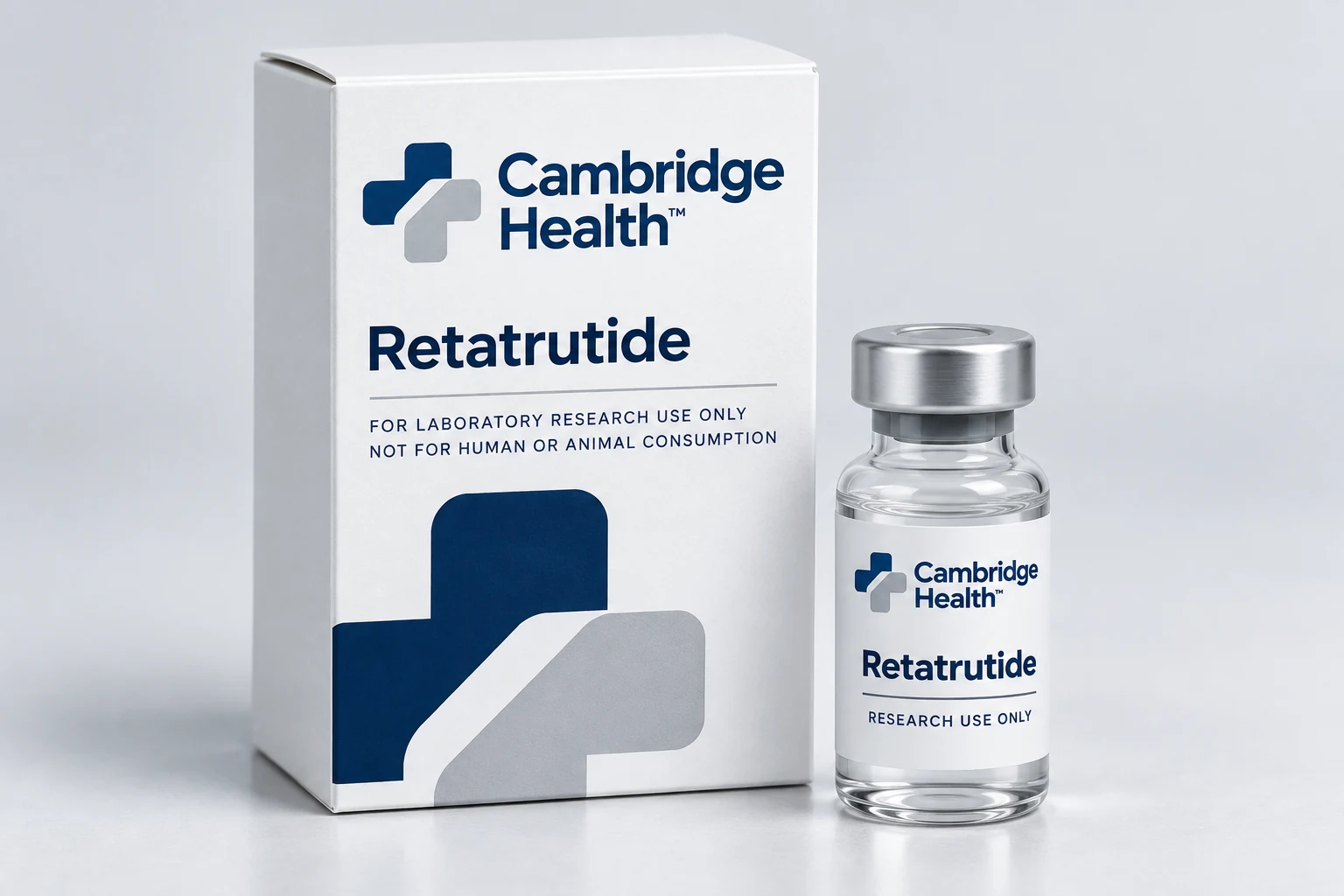
Illustrative packaging. Actual presentation may vary.
Retatrutide overview
Retatrutide is a next generation triple agonist peptide currently being researched for weight management, metabolic health and appetite regulation. Unlike traditional GLP-1 compounds, Retatrutide targets three separate hormone receptors including GLP-1, GIP and glucagon receptors.
Read the evidence before you enquire: how retatrutide works across the GLP-1, GIP and glucagon receptors, the phase 2 and phase 3 trial results explained, dose response in the trials and side effects reported in the trials. For comparisons and UK context see retatrutide vs tirzepatide and semaglutide and whether retatrutide is legal in the UK. The multidose RetaPen is also available as a research pack.
Retatrutide research areas
Research investigates the following endpoints:
- Fat mass and body composition in research models
- Appetite and food-intake measures in research models
- Insulin sensitivity measures
- Energy expenditure and metabolic activity
- Glucose regulation research
- Long-term body composition research
These research areas describe study endpoints, not established benefits of the materials supplied here.
How Retatrutide works in research
Retatrutide (LY3437943) is a next-generation triple agonist peptide that simultaneously activates GLP-1, GIP and glucagon receptors. It is one of the most advanced metabolic research peptides currently under investigation, studied for its potential to address multiple aspects of energy regulation through a single compound. Research has focused on its effects on appetite suppression, insulin sensitivity, hepatic fat metabolism and resting energy expenditure. The triple receptor engagement differentiates it from earlier single or dual agonist compounds such as Semaglutide and Tirzepatide. Available in 5mg, 10mg, 15mg, 20mg, 30mg, 40mg and 60mg vial formats.
Scientific information
Retatrutide vs Semaglutide vs Tirzepatide
| Feature | Retatrutide | Tirzepatide | Semaglutide |
|---|---|---|---|
| Receptor targets | GLP-1 + GIP + Glucagon | GLP-1 + GIP | GLP-1 only |
| Generation | Triple agonist | Dual agonist | Single agonist |
| Research focus | Metabolic + energy expenditure | Metabolic + incretin | Incretin + appetite |
| Available sizes | 5-60mg | 2-100mg | 5-30mg |
Important information
Research use only. Not a medicine, not a supplement, not approved for human or animal use.
Cambridge Health™ does not provide usage, dosage, reconstitution or administration guidance for any product. Product information on this page is provided for research and educational context only.
Safety information
- Supplied strictly for laboratory and analytical research use. Not for human or animal consumption.
- No medical advice, treatment guidance or personal use recommendations are provided.
- Buyers are solely responsible for ensuring that the purchase, import, handling and use of research materials is lawful in their jurisdiction.
Research status
Supplied for laboratory research use only. Not a licensed medicine and not approved for human or animal use.
Retatrutide research questions
What is retatrutide?
Retatrutide (LY3437943) is a peptide that activates three receptors: GLP-1, GIP and glucagon. That is why it is called a triple agonist. It was developed by Eli Lilly and, at the time of writing, is still an investigational compound and not an approved medicine. Cambridge Health supplies it for laboratory research use only.
How is retatrutide different from semaglutide and tirzepatide?
Semaglutide acts on the GLP-1 receptor. Tirzepatide acts on the GLP-1 and GIP receptors. Retatrutide adds activity at the glucagon receptor. This describes the receptor targets only. It is not a comparison of effectiveness or safety.
What has been published about retatrutide?
The most cited paper is a phase 2 trial in adults with obesity, published in the New England Journal of Medicine in 2023 by Jastreboff and colleagues. Later phase 3 studies are run by the developer. Clinical trial results describe a medicine given under medical supervision, so they do not describe the research materials supplied here. See retatrutide trial results explained and the comparison with tirzepatide and semaglutide.
What do retatrutide research studies measure?
Studies look at body weight and composition, appetite and food intake, energy expenditure, glucose regulation and liver fat. See the research areas section above for the full list.
What retatrutide sizes does Cambridge Health supply?
Vials from 5mg to 60mg. The RetaPen is a 40mg multidose research pen supplied with 5 pen needles.
Is batch documentation available?
Yes, on request. Use the enquiry page and quote the product and batch you are interested in.